Shockwave Therapy
Written by Dr. David Dow
5 min read

Let me guess. There’s a spot on your body that you’ve quietly made peace with. Maybe it’s your heel, and your first few steps out of bed look like you’re crossing hot sand. Maybe it’s an elbow that complains every time you lift a coffee mug, or a shoulder with strong opinions about reaching into the back seat.
You’ve had it for months, possibly years, and somewhere along the way you stopped calling it an injury and started calling it “just my thing.” I hear about “just my thing” every single week here in Central Park. I’ve been a chiropractor long enough to know that almost nobody leads with it, either. It comes out at the end of a visit, halfway to the door, right after the words “oh, one more thing.”So let’s talk about your one more thing, because I’ve got some good news about it.
You did everything right, and it still didn’t heal
First, let me take something off your plate. If you rested it, iced it, stretched it, bought the fancy insoles and watched more physical therapy videos than you’d care to admit, you didn’t fail. You did what any sensible person would do.
Here’s what I’ve learned from watching thousands of these injuries over the years. Your body is remarkably good at healing, but it works a lot like a construction crew. When you first get hurt, that crew shows up in force with extra blood flow, swelling and all the raw materials a repair needs. That’s the sore, angry phase, and as unpleasant as it feels, it means work is getting done.
Tendons and the tough tissue along the bottom of your foot are a harder job site than most. They don’t get much blood supply to begin with, and you can’t exactly stop using your foot for three months while things set. So the repair keeps getting interrupted by ordinary life, whether that’s chasing kids around the playground, walking the dog or a Saturday run along the Sand Creek Greenway.
Eventually the crew packs up and goes home, even though the job isn’t finished. What’s left behind is tissue that’s half repaired, a little disorganized and cranky whenever you ask much of it. Your body has stopped treating it as an emergency, so you rest it for another month. And nothing happens.

So what is shockwave? (No, not what it sounds like)
I’ll admit the name does us no favors. “Shockwave therapy” sounds like something a cartoon villain would threaten you with, and I’ve watched plenty of eyebrows go up when I mention it. There’s no electricity involved, and nobody is getting shocked.
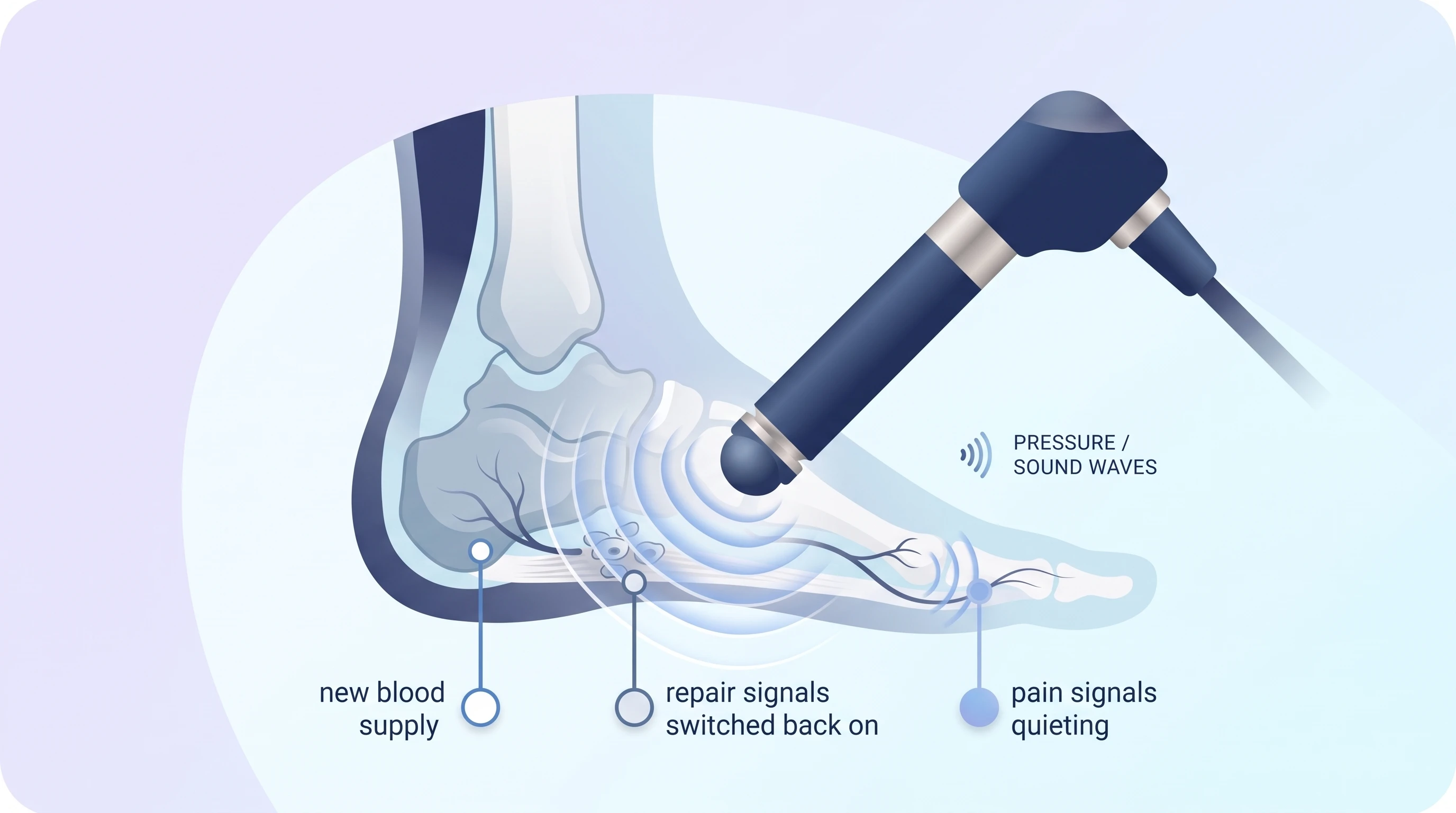
A shockwave is simply a pulse of sound, a pressure wave that travels through your skin and into the tissue underneath. If you’ve ever stood near the speakers at a Red Rocks show and felt the bass in your chest, you already understand the basic idea. Sound is physical, and it can move things.
It has an interesting backstory, too. Doctors first used these waves decades ago to break up kidney stones without surgery, and along the way researchers noticed that gentler versions seemed to help bone and tendon heal.
When we aim those pulses at a stalled injury, your body reads them as a fresh signal that something here needs attention. Researchers who study this describe a few things happening in response. New, tiny blood vessels begin to form, your cells release the signals that drive repair, and the pain messages coming from that area tend to quiet down.
In construction crew terms, we’re ringing the dinner bell and calling everybody back to the job site. That’s what I love about it. Nothing is being put into your body, and nothing is being covered up. We’re reminding your body to finish a job it already knows how to do.
Where it shines, and where I’ll tell you to skip it
I’d be a lousy guide if I told you this works for everything, so let me be straight with you about what the research supports. Evidence is strongest for a handful of stubborn problems that probably sound familiar:
Heel pain that’s at its worst first thing in the morning, which you may know as plantar fasciitis
Tennis elbow, which around here is mostly pickleball elbow
Shoulder pain caused by calcium deposits in the tendon
That deep ache on the outside of your hip
Achilles tendon trouble has encouraging research behind it as well, though there’s less of it so far. It’s also not for everyone. If you’re pregnant, taking blood thinners or living with a bleeding disorder, this isn’t your tool, and we have plenty of other ways to help you. It’s built for old, stubborn problems, too, not the ankle you rolled last weekend.

One more honest thing. This isn’t a magic wand, and it’s rarely a one-visit wonder. It works on your body’s own repair schedule, so improvement tends to build over weeks instead of overnight. I’d much prefer you hear that from me now than feel let down later.
“Okay, but what does it feel like?”
Everybody asks this first, usually while eyeing the machine with some suspicion.
A session is short. We put a little gel on your skin, hold a handheld applicator against the sore spot and deliver a series of rapid pulses. Most people describe it as a fast tapping or thumping. It can be uncomfortable right over the tender area, in a “yep, that’s the spot” kind of way, and we can turn it up or down as we go so it stays tolerable.
[DAVID TO CONFIRM: session length in minutes and the typical number of visits with our device. One sentence will go here.]
Then you get up and go about your day. There are no needles, nothing to recover from and no reason you can’t drive yourself home. You might be a little sore or see some mild redness afterward, much like you would after a deep massage.

Curious whether your “one more thing” is a fit for shockwave? Schedule your visit online and pick a time that works for you, or call us at 303-507-7753 if you’d like to talk it through first. If it’s not the right tool for you, I’ll tell you that too.
Winter is coming. Your heel doesn’t have to come with it.
Here’s why I’m bringing this up in October. We live in a place where people don’t hibernate. In a few weeks you’ll be shoveling the driveway, hauling skis out of the garage and walking the dog on icy sidewalks, and all of it asks a lot from a body that’s already working around a sore spot.
That’s what I’d want you to take from this, whether you ever try shockwave or not. When one part of you hurts, everything else compensates. You shift your weight, shorten your stride or stop using one arm, and before long I’m seeing you for a back or a hip that was never the original problem. I’ve watched that story play out more times than I can count.
So please don’t make peace with “just my thing.” Your body hasn’t given up on healing it. It got distracted, and there are more ways to get its attention back than there were even a few years ago.
If you’ve got a one more thing, bring it up next time you’re in. I promise I won’t make you wait until you’re halfway out the door.
See you around Central Park,
Dr. David Dow
Dr. David Dow
Chiropractor
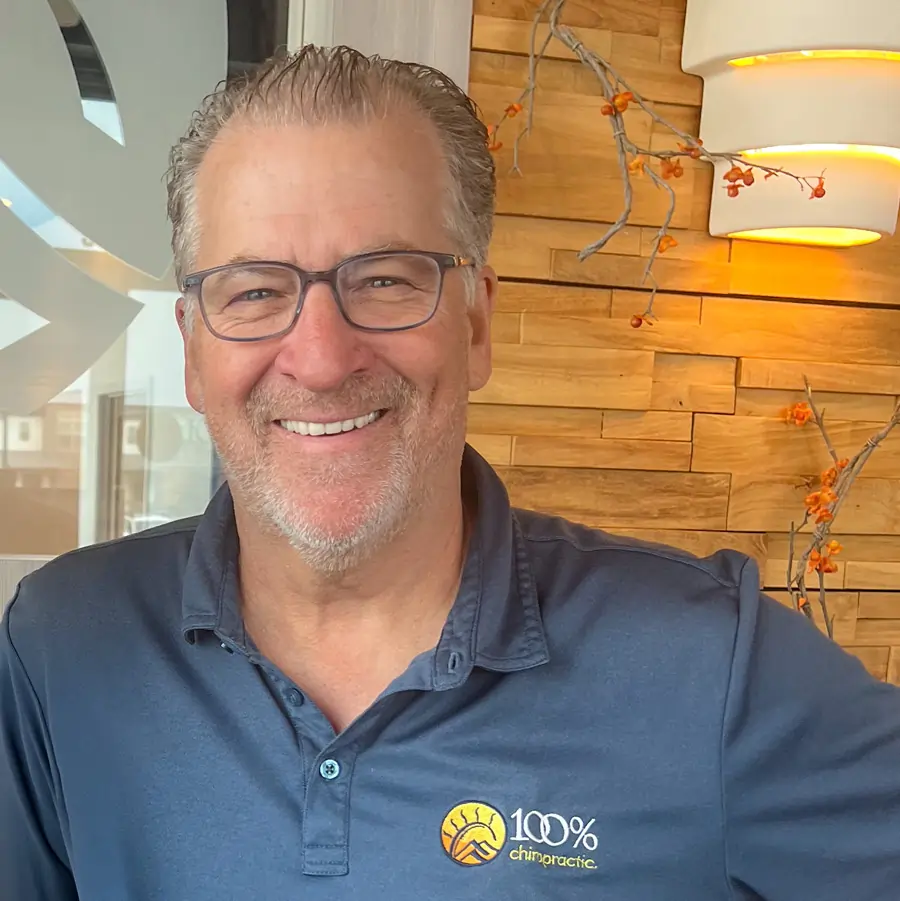
Dr. David Dow is a chiropractor at 100% Chiropractic in Central Park. After over 20 years running his own clinic in Minnesota, he moved to Denver with his wife, Lezli, to be closer to family. He believes the body can heal itself with the right support.